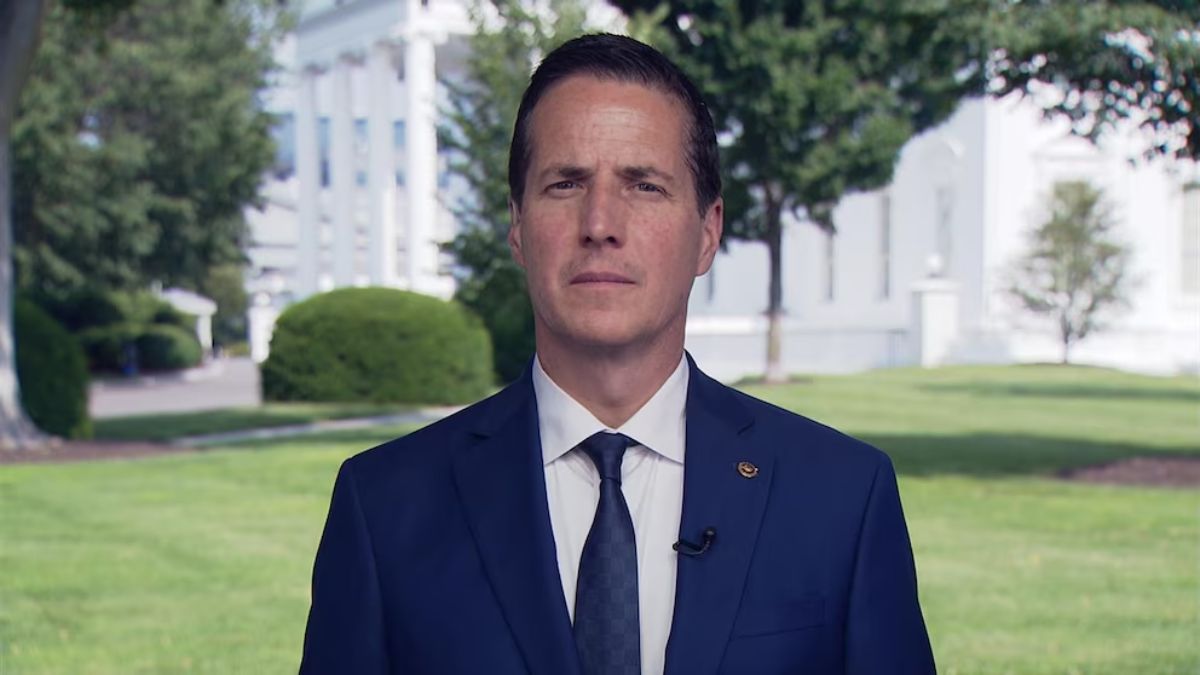
A new bill introduced by Senator Bernie Moreno (R-Ohio) could drastically change what it means to be an American citizen. The Exclusive Citizenship Act of 2025 seeks to eliminate dual citizenship altogether, forcing individuals to choose between the United States and any other country they hold citizenship in. If passed, this law would mark one of the most significant overhauls of U.S. citizenship policy in decades.
Let’s break down what the bill says, why it matters, and what it could mean for millions of Americans.
Table of Contents
Proposal

At the heart of the Exclusive Citizenship Act is a simple but sweeping idea: you can only be a citizen of one country — the United States — if you want to keep your U.S. citizenship. The bill would:
- Prohibit any U.S. citizen from simultaneously holding citizenship in a foreign country.
- Require those with dual citizenship to renounce one of their citizenships within one year of the bill becoming law.
- Automatically strip U.S. citizenship from individuals who fail to comply.
According to the bill, this is about loyalty: “Sole and exclusive allegiance” to the United States. If someone voluntarily acquires citizenship in another country after this bill is enacted, they would be considered to have relinquished their U.S. citizenship.
Enforcement
To make this happen, the bill outlines a process led by the Secretary of State. Individuals would need to submit either:
- A written renunciation of foreign citizenship to the U.S. State Department,
or - A written renunciation of U.S. citizenship to the Department of Homeland Security.

Those who don’t submit the proper paperwork within one year would automatically be treated as having given up their U.S. citizenship under section 349(a) of the Immigration and Nationality Act.
The bill also calls for new systems:
- A verification process for confirming citizenship status.
- Federal recordkeeping systems to track those who have relinquished their citizenship.
- Coordination between the State Department, Department of Homeland Security, and Department of Justice to ensure former citizens are treated as non-citizens under immigration laws.
Justification
Senator Moreno made his stance clear: “Being an American citizen is an honor and a privilege — and if you want to be an American, it’s all or nothing. It’s time to end dual citizenship for good.”

His argument rests on the idea that dual citizenship creates conflicting loyalties. Under this bill, the U.S. would adopt a “you’re in or you’re out” model of national allegiance.
Opposition
But here’s the catch: the U.S. Constitution and courts have repeatedly protected dual citizenship.
In Afroyim v. Rusk (1967), the Supreme Court ruled that a U.S. citizen cannot be stripped of their citizenship unless they voluntarily give it up. Earlier, in Talbot v. Jansen (1795), the court ruled that citizens could hold foreign nationality without forfeiting their American status.
So Moreno’s bill is likely to face serious constitutional challenges if it becomes law. Legal experts could argue that it violates the 14th Amendment’s citizenship protections and Supreme Court precedents.
Who’s Affected?
This bill isn’t just theoretical — it would affect millions of Americans.
While the U.S. government doesn’t track dual citizenship, estimates suggest more than 40 million Americans are eligible. Many are Mexican-Americans, Canadian-Americans, and Americans with European, Middle Eastern, or Asian heritage.
In many cases, people inherit dual citizenship by birth — for example:
- A child born in the U.S. to Mexican parents may automatically have both American and Mexican citizenship.
- Someone born in France to American parents may hold both nationalities.
Under this bill, they’d have to choose — often giving up deep family, cultural, and economic ties to one country or the other.
Timeline
If passed, the law would go into effect 180 days after enactment. That means U.S. citizens with dual citizenship would have one year from that date to submit their renunciation forms — or face automatic loss of American citizenship.
Reality Check
Though bold, this bill faces long odds. Not only would it require significant support in both chambers of Congress, but it would almost certainly trigger a wave of legal battles. Critics will likely argue that it infringes on rights long protected by the courts.
But Moreno’s proposal taps into a growing debate over immigration, national identity, and what it means to be an American in an increasingly globalized world. Whether it becomes law or not, it’s sure to stir strong opinions across the political spectrum.
FAQs
What is the Exclusive Citizenship Act?
It’s a bill that would ban dual citizenship for U.S. citizens.
Who introduced the bill?
Senator Bernie Moreno (R-Ohio) introduced the bill in 2025.
What happens if I don’t choose?
You’d automatically lose your U.S. citizenship after one year.
Is dual citizenship legal now?
Yes, and it’s been protected by several Supreme Court cases.
How many Americans have dual citizenship?
It’s estimated over 40 million Americans are eligible.