The Earth is spinning faster, but don’t panic—you’re not going to get dizzy or fly off into space. According to NASA and the Institute of Geophysics, the planet’s rotation has been speeding up since 2020, and scientists are puzzled. What used to be slow and steady is now showing unusual signs of acceleration, and no one knows why.
While you probably didn’t feel a thing, some days in recent years have been slightly shorter than 24 hours. In fact, the fastest day ever recorded was July 5, 2024, which was shortened by 1.66 milliseconds. Not even your fastest blink is that quick, but the implications go far beyond what we can sense.
Table of Contents
Shorter

Normally, a solar day is 24 hours long—86,400 seconds. But Earth doesn’t follow exact rules. Due to factors like the gravitational pull of the Moon, our days vary slightly. Historically, Earth’s rotation has been slowing down, thanks to tidal friction. So the recent speeding up caught everyone by surprise.
Scientists say this acceleration began in 2020 and has continued into 2024, setting new records year after year.
Here’s a quick summary:
| Year | Time Shortened |
|---|---|
| 2021 | 1.47 ms |
| 2022 | 1.59 ms |
| 2023 | 1.31 ms |
| 2024 | 1.66 ms (record) |

These time changes are measured using atomic clocks—the most precise tools on Earth. They help run everything from GPS satellites to global communication systems.
Mystery
The big question is: why is this happening?
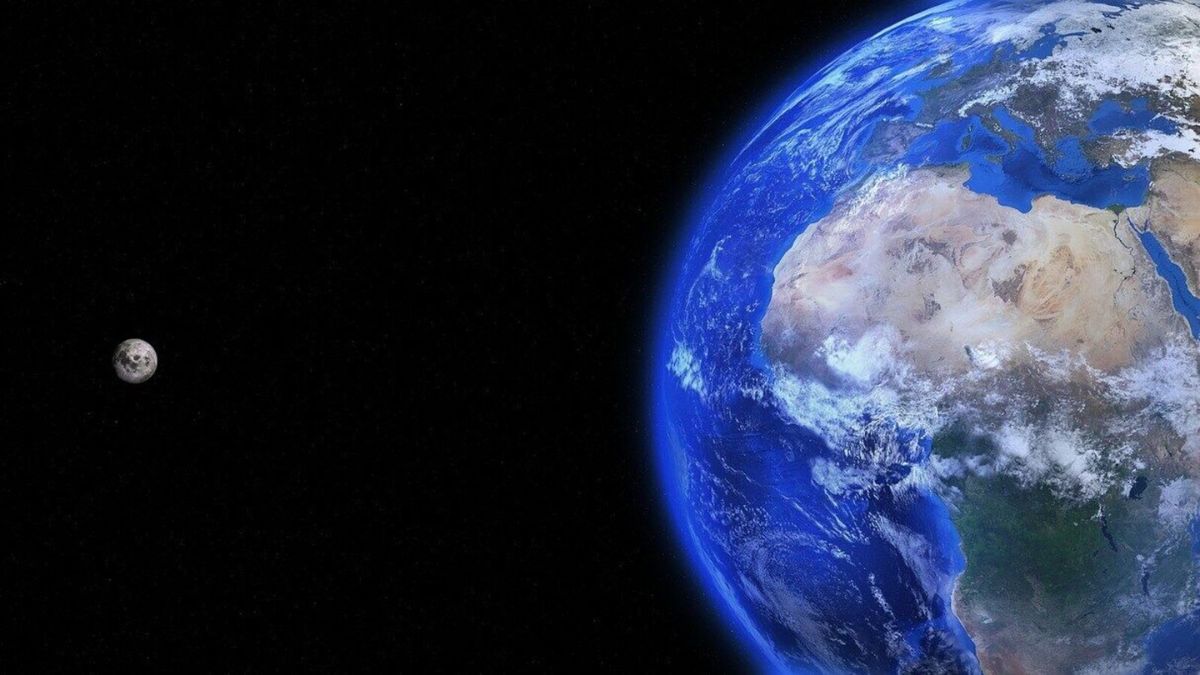
So far, there’s no definite answer. One theory ties the acceleration to changes in the Moon’s orbit. Scientists noticed that the shortest days seem to happen when the Moon drifts farther from Earth’s equator, which could cause Earth’s mass to shift and speed up the spin.
But this lunar movement has been going on forever. So why is it suddenly affecting our rotation now? No one really knows.
Past
Fun fact: When Earth first formed, days were a lot shorter. Scientists estimate that a full day lasted only 3 to 6 hours. That’s barely enough time for breakfast, work, and dinner.
Over billions of years, the Moon’s gravitational pull gradually slowed the rotation down. That’s why a 24-hour day became the norm. Now, it seems something is disrupting that balance—though we’re still talking about changes measured in fractions of a millisecond.
Impact
For everyday life, this change means absolutely nothing. You’re not going to leave work earlier, and you definitely won’t feel the difference. It’s like losing a single grain of sand from a beach.
But in the world of tech? That’s where things could get tricky.
Most digital systems—including GPS, internet networks, and even stock exchanges—rely on super-precise timing. A few milliseconds off can lead to mismatches in data, communication glitches, or even system failures. Engineers are watching the situation closely and may need to adjust how these systems keep time.
So no, the internet won’t collapse tomorrow, but it’s something to keep an eye on.
Future
Let’s look way, way ahead—like 50 billion years ahead. Scientists believe that if the Earth and Moon continue to influence each other, they could eventually become tidally locked. That means Earth would always show the same side to the Moon, just like the Moon does to us now.
This would eliminate tides completely and change our night sky forever. One half of the planet would always see the Moon, and the other half never would.
Of course, none of us will be around for that. By then, the Sun will have reached the end of its life, and Earth probably won’t be livable anymore.
Gradual
Don’t worry—there’s no sudden stop or jarring shift in Earth’s rotation. These changes are incredibly slow. What’s happening now is more like the Earth hitting the cosmic snooze button… or maybe waking up a little earlier than expected.
For now, scientists will keep tracking these tiny shifts. As for you? Keep living your life, millisecond by millisecond.
FAQs
Is Earth really spinning faster now?
Yes, since 2020 Earth’s rotation has been speeding up slightly.
How much shorter are the days?
Some days are 1.66 milliseconds shorter than 24 hours.
Can we feel the change in rotation?
No, the change is too small to feel in daily life.
Will this affect GPS or satellites?
Possibly, as precise timing is crucial for tech systems.
What causes Earth’s rotation to change?
It may relate to the Moon’s position and Earth’s mass shift.