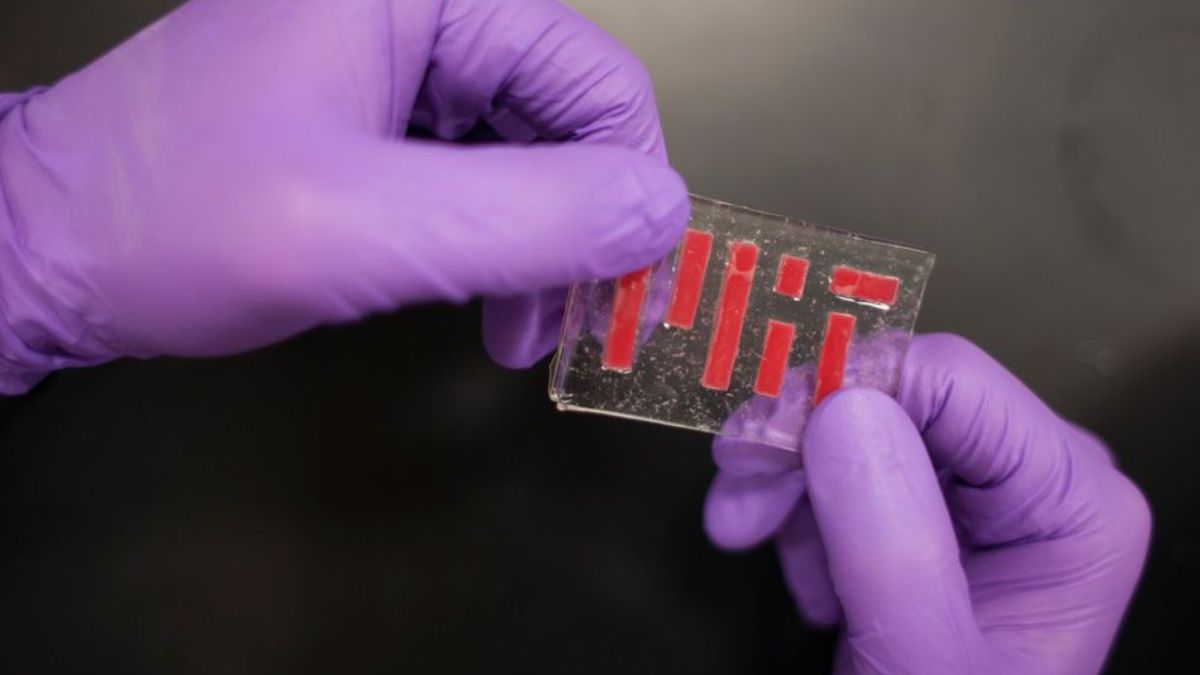
Scientists have just pulled off something that feels straight out of sci-fi. They’ve created a rigid hydrogel that mimics the flexibility and self-healing properties of human skin—and it could change everything from medicine to robotics.
Published in Nature Materials, this breakthrough is being described as a major “before and after” moment in material science. Why? Because this material doesn’t just bounce back from damage—it does it without needing any tools, patches, or electricity. It just… heals. Like skin.
Table of Contents
Balance

Creating a material that’s both tough and self-healing has been a dream for years. But until now, it was nearly impossible. If the hydrogel was flexible enough to self-repair, it was too soft and broke easily. If it was strong enough to hold up under pressure, it lost its ability to regenerate.
Scientists have always had to pick one or the other—until now.
Thanks to a technique called coplanar nanoconfinement, researchers figured out how to organize the material’s molecules in such a precise way that they can shift, move, and heal without breaking the structure. That means the material can be both rigid and self-healing.

The result? A hydrogel that’s tough, elastic, and capable of regenerating without any help.
How
The secret sauce is a material called synthetic hectorite—a type of nano-clay. Picture tiny, flat sheets that act like a scaffold. These sheets hold the material’s molecules in place but still give them room to move when damaged.
So when the material breaks, the molecules don’t snap apart permanently. Instead, they rearrange themselves, close the gap, and return to their original state.

Even after multiple fractures, the hydrogel keeps healing itself, no electricity, heat, or treatment needed—just time and a little patience.
Uses
The applications? Practically endless.
In medicine, this could lead to:
- Implants that repair themselves
- Bandages that help tissues heal
- Prosthetics that last longer and adapt to wear
Right now, many medical devices need replacing after a few years. Imagine materials that repair themselves internally, saving time, money, and reducing surgical risks.
In soft robotics, which focuses on making machines that move like living organisms, this material could be a total game-changer. Think robots that recover from damage automatically, like an axolotl regrowing a limb.
Even 3D printers and flexible electronics could benefit from this. Devices that recover after bending, being cut, or even hit could soon be a reality.
Strong
So how strong is it, really?
According to the research, this hydrogel can handle up to 4.2 MPa of tension—impressive for a soft material. And it maintains 100% self-healing efficiency. That’s unheard of in materials that aren’t hard as rock or metal.
Here’s a quick breakdown:
| Feature | Traditional Hydrogels | New Hydrogel |
|---|---|---|
| Flexibility | High | High |
| Rigidity | Low | High |
| Self-healing Ability | Medium to low | 100% |
| Healing Time | Slow or needs help | Automatic |
| Applications | Limited | Wide-ranging |
Smart
This discovery isn’t just tough—it’s sustainable too. It doesn’t require industrial processing, works with multiple polymers, and uses energy-efficient methods.
Scientists are also testing MXenes, advanced materials that could give the hydrogel electrical conductivity, turning it into a “smart” material. That would open doors for interactive or responsive medical devices, electronic skins, and more.
The line between synthetic and biological is starting to blur.
Future
Now imagine this material in spacecraft, deep-sea exploration vehicles, or aerospace structures. Environments where humans can’t easily make repairs. A self-healing surface could prevent disasters, extend lifespans of tech, and even allow for more autonomous missions.
And for Earth-bound uses? It could mean stronger, more durable consumer products—from phones to sneakers to wearables.
This new hydrogel may look simple, but it’s a massive leap. A once-impossible combo of strength and recovery, now made real.
Because sometimes the best innovation isn’t something that never breaks—but something that always heals.
FAQs
What is the new hydrogel made of?
It uses synthetic hectorite and nanoconfinement to be strong and self-healing.
Can it heal without tools or electricity?
Yes, it heals completely on its own with time.
How strong is this hydrogel?
It withstands up to 4.2 MPa and heals 100% after damage.
Where could this material be used?
In medicine, robotics, electronics, and even aerospace.
Does this hydrogel need industrial processes?
No, it’s energy-efficient and easy to apply to different polymers.