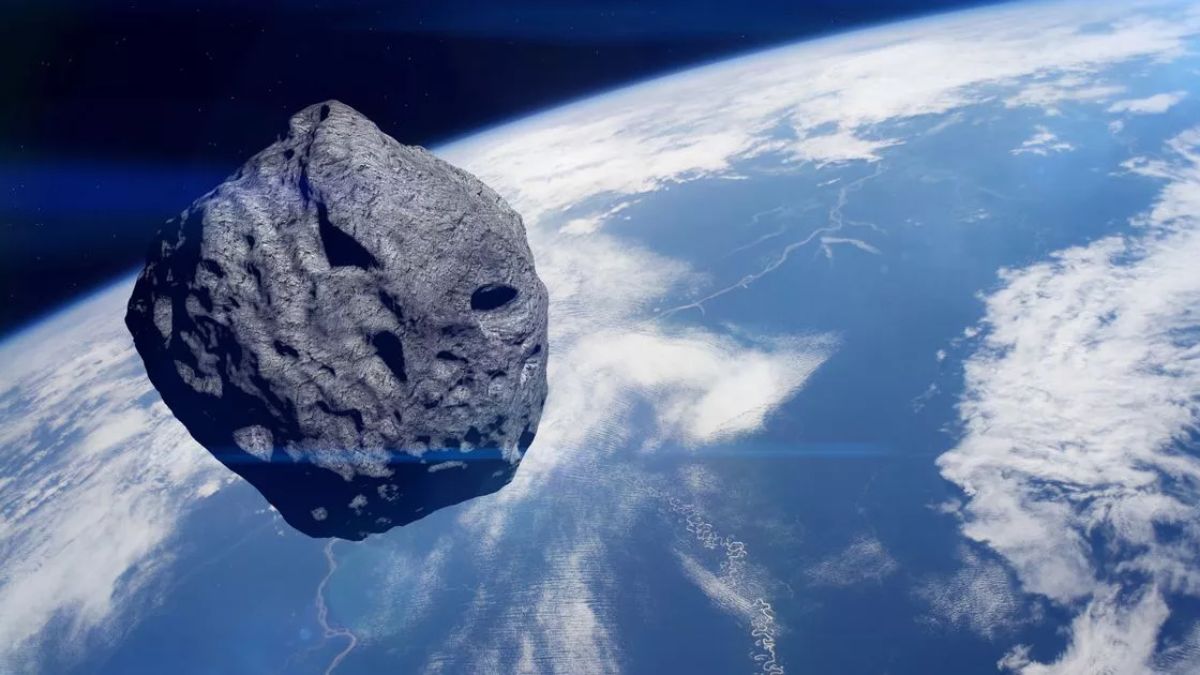
We’ve all heard about space rocks hurtling through space, but what if some of the most dangerous ones are right in front of us—and we just can’t see them? That’s exactly what scientists are now warning.
A hidden group of asteroids, possibly in the hundreds, could be orbiting the Sun near Venus, and some may pose a real threat to Earth. The scary part? The Sun’s glare makes them nearly impossible to detect with current telescopes.

Let’s break down why these “invisible asteroids” are so concerning, how they’ve managed to stay hidden, and what we can do about them before one decides to visit Earth.
Table of Contents
Hidden
So, why haven’t we seen these space rocks before? The answer is sunlight. These asteroids orbit closer to the Sun than Earth does, often near Venus. To spot them, astronomers would have to aim their telescopes toward the Sun—something that’s incredibly difficult because of the Sun’s intense brightness.
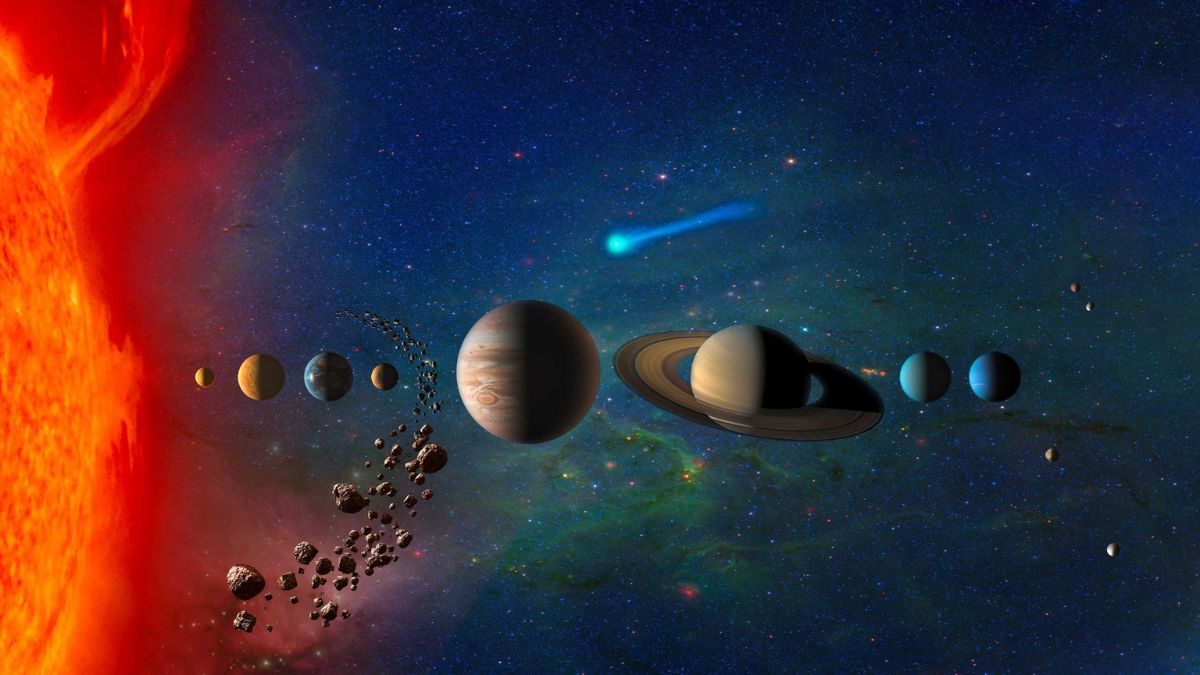
Trying to see these asteroids is like trying to spot a candle flame in broad daylight. As astronomer Valerio Carruba from Brazil explains, these objects orbit in resonance with Venus, which means they follow similar paths to the planet but not around it. Instead, they share the Sun’s orbit with Venus—sometimes ahead, sometimes behind, sometimes crossing.

Because they’re hidden by sunlight, they might be passing near us more often than we realize—and that’s what makes them so risky.
Orbits
These Venus co-orbital asteroids are not your typical space rocks. Their orbits are complicated and unstable. They don’t just stay neatly in line; they wander.
While only 20 of these types of asteroids have been officially identified so far, astronomers think there could be hundreds. The issue? Their orbits are constantly shifting and evolving every 12,000 years or so. That makes long-term tracking incredibly difficult.
Scientists can only predict their movement accurately about 150 years into the future. After that, it’s anyone’s guess. One slight shift and an asteroid could veer out of its orbit and end up on a path toward Earth.
Danger
Just how bad could it get if one of these invisible asteroids hit us? Pretty bad.
Some of them are about 300 meters wide—big enough to leave a crater several kilometers across. That’s not just a little bang. It’s an explosion with the energy of hundreds of megatons, more than enough to wipe out an entire city and cause a regional catastrophe.
The danger isn’t just their size. It’s that we may never see them coming. These asteroids can blend in with the Sun’s glare and sneak past our best defenses—until it’s too late.
Eccentricity
One of the key traits of these asteroids is something called eccentricity. This is a measure of how stretched out an orbit is. Earth’s orbit is nearly circular, with an eccentricity of just 0.017. But these asteroids have highly elongated orbits—often with eccentricities above 0.38.
Because of that, they sometimes move much closer to Earth, giving scientists a very narrow window to spot them. The best time? Twilight. When the Sun has set but its light still illuminates space just enough for telescopes to catch a glimpse of any passing object.
But even then, spotting them is tough.
Here’s a quick comparison:
| Feature | Earth’s Orbit | Venus Co-Orbital Asteroids |
|---|---|---|
| Eccentricity | 0.017 | 0.38+ |
| Stability | Highly stable | Chaotic |
| Visibility from Earth | Easy | Extremely hard |
| Risk to Earth | Low | Potentially high |
Simulation
To better understand the risk, Carruba and his team ran simulations focusing on these hidden asteroids, especially those with more circular orbits (lower eccentricity). The results? Even those could one day become a threat.
Here’s the kicker: even powerful new telescopes like the Vera Rubin Observatory will only be able to spot them at specific times of the year, and only under ideal viewing conditions. The observatory, which will have the largest space camera ever built, is a step forward—but it still won’t be enough.
That means large windows of time when dangerous asteroids could be lurking unseen near Earth.
Solutions
So what can we do?
Scientists suggest placing a telescope in space, specifically near Venus’s orbit. From that position, it would have a much better view of these hard-to-spot asteroids. Instead of looking into the Sun, it would look outward, detecting objects from the direction we can’t currently see.
Another possible help is NASA’s NEO Surveyor mission, a planned space telescope designed to scan the inner Solar System for exactly these kinds of threats. Unlike ground-based observatories, it wouldn’t be limited by Earth’s atmosphere or the Sun’s glare.
But time is ticking. Until those missions launch, we’re still largely in the dark—literally—about what’s flying near Venus and whether it’s coming our way.
One thing’s clear: to protect Earth, we need to keep looking in the places we’ve never looked before.
FAQs
Why can’t we see Venus co-orbital asteroids?
They’re hidden by the Sun’s glare, making them invisible to telescopes.
How big are these hidden asteroids?
Some are up to 300 meters wide, large enough to destroy a city.
What makes their orbits unstable?
They have high eccentricity and chaotic paths that change over time.
Can telescopes like Rubin detect them?
Only during limited times of the year, and with difficulty.
What’s the best solution to spot them?
A telescope in space near Venus or NASA’s NEO Surveyor mission.