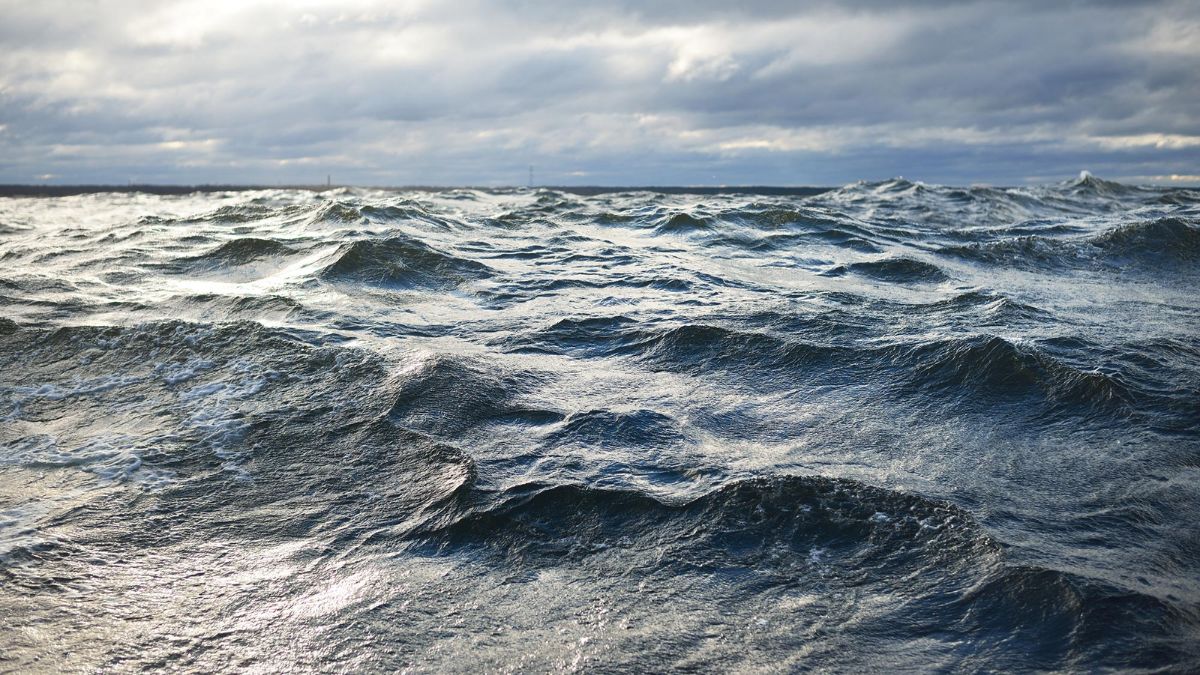
A stunning geological discovery under the North Sea has left scientists scratching their heads. A recent study published in Nature reveals a rare and baffling phenomenon: part of the ocean floor appears to be completely upside down. Yes, you read that right.
The usual top-to-bottom rock structure has literally flipped—upending what geologists thought they knew about seabed formation. Let’s cut into this mystery that’s shaking up marine science.
Table of Contents
Seabed

Typically, the ocean floor is layered like a cake—oldest layers on the bottom, newer ones piled on top. These layers build up over millions of years as sediments settle in predictable patterns. It’s geology 101.
But beneath the waters of the North Sea, something strange has occurred. Scientists discovered that newer, heavier layers of sand have sunk while older, lighter layers have floated upwards. This defies the basic rules of sedimentation and suggests a massive geological twist that’s extremely rare on such a large scale.
Inversion
This jaw-dropping occurrence is called stratigraphic inversion—basically, a flip in the normal sequence of sedimentary layers. While scientists have occasionally seen small-scale inversions around the world, the North Sea case is massive. We’re talking about an entire region where layers of Earth’s history have turned upside down.

To describe this oddity, researchers have even coined new terms:
Sinkites: the younger, denser layers that have sunk deep.
Floatites: the older, lighter layers now found above them.

It’s as if Earth played a reverse UNO card with the seabed—and nobody saw it coming.
Discovery
So, how did scientists figure this out? Through high-resolution seismic imaging. This technology sends sound waves deep into the seabed and records the echoes as they bounce back. Think of it like an ultrasound for the Earth’s crust.
When the data came in, geologists were stunned. The seismic maps showed the rock layers were completely out of order. Instead of the standard top-down structure, the layers were flipped. It was clear that something major had disrupted the seabed’s natural flow.
Timeline
The researchers traced the event back to around 5.3 million years ago, during the transition from the Miocene to the Pliocene epoch. At that time, the Earth’s crust in this region experienced massive tectonic activity.
These seismic shifts cracked the seafloor, allowing dense sand from above to slip through the gaps, while lighter, older material was pushed upwards. Over time, this process led to a large-scale reorganization of the seabed across kilometers of ocean floor.
Here’s a quick timeline breakdown:
- Event Geological Period Approx. Time Ago
- Initial crust movements Late Miocene ~5.3 million years ago
- Stratigraphic inversion begins Early Pliocene ~5 million years ago
- Present-day discovery Modern era 2024
- Impact
Why does this discovery matter? It’s not just about rocks flipping around. This finding could:
Change how scientists view ocean floor stability.
Help predict future underwater geological changes.
Improve the safety of oil rigs and gas exploration platforms.
Enhance knowing of seismic risks under the sea.
Previously, the ocean floor was considered fairly stable. Now, this discovery shows it can undergo dramatic shifts—even in regions that appear calm on the surface.
Future
This is just the beginning. Scientists are now re-examining other ocean floors around the world. Could similar upside-down layers be hiding in plain sight? And what does this say about Earth’s evolving geology?
The North Sea inversion also raises questions about how we interpret seismic data, map underwater resources, and prepare for natural events like underwater landslides or even tsunamis.
The Earth’s crust is more dynamic than we thought, and the deep sea holds far more mysteries than we’ve imagined. One thing’s for sure: the North Sea just became a hotspot for geological research.
This surprising flip in the seabed’s structure reminds us that Earth is far from still. Even the calmest waters hide powerful, ancient forces. And while scientists continue to cut into this upside-down puzzle, it’s clear there are many more secrets lurking beneath the waves—waiting to be uncovered.
FAQs
What is stratigraphic inversion?
It’s when older seabed layers rise above newer ones.
Where was this found?
In the North Sea, near the UK, Norway, and Denmark.
How was it discovered?
Using high-resolution seismic imaging.
What caused the inversion?
Seismic shifts around 5.3 million years ago.
Why does this matter?
It challenges how we view seabed stability.