Imagine stepping outside at night, looking up at the sky, and spotting a soft glow that doesn’t come from the Moon—but from a giant mirror orbiting Earth. Sounds like science fiction, right? But this is a very real idea being proposed by a California-based startup called Reflect Orbital.
Their bold mission: to launch 4,000 space mirrors that reflect sunlight onto Earth, even after sunset. While the concept is fascinating, it’s already raising serious concerns in the scientific community.
Table of Contents
Light

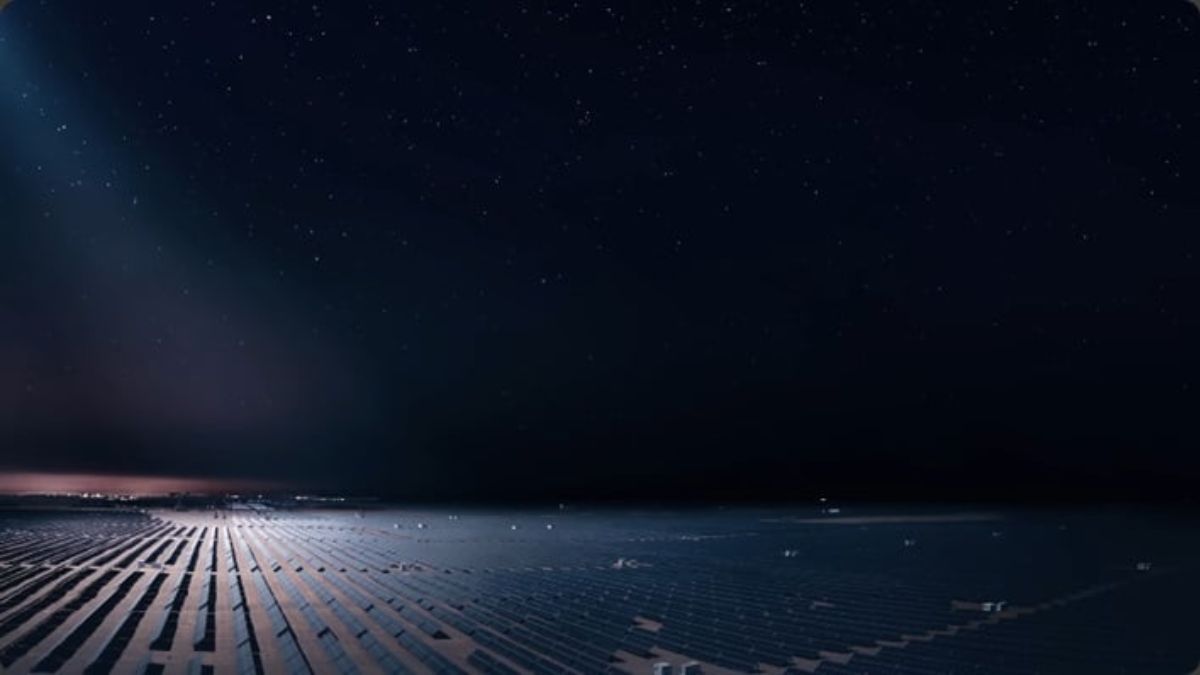
The main idea behind Reflect Orbital’s plan is simple—bring sunlight to the night. Solar energy is fantastic, but it only works when the Sun is shining. What if we could bounce that sunlight back toward Earth during the night? That’s what these mirrors would do.
The company wants to place these mirrors into orbit along the terminator line—the imaginary division between day and night. There, they’d catch sunlight and redirect it to targeted spots on Earth. It’s a way to stretch daylight, maybe help energy use, and even reduce nighttime power needs.
Mirrors
Let’s talk scale. These mirrors aren’t small gadgets—they could be as wide as 55 meters, making them larger than many small buildings. The glow they create wouldn’t turn night into day, but it would be a soft, moon-like shine. According to Reflect Orbital, the first test satellite—called EARENDIL-1—could launch as early as April 2026.

During that test, people in some regions might see what looks like a fast-moving, glowing star streak across the sky. If all goes well, this would just be the beginning.
Sky
But here’s where things get complicated. Astronomers are already raising red flags. Space is getting crowded fast. In 2019, there were around 2,000 satellites. Fast forward to 2025, and that number has jumped to 15,000. By 2040? Experts estimate we could have over 560,000 satellites orbiting Earth.
Now add 4,000 mirrors to that mix—and you’ve got a serious traffic jam in space. More objects mean more chances of collision. Crashes create space junk, and that debris can cause even more damage to satellites, space stations, and future missions.
| Year | Estimated Satellites |
|---|---|
| 2019 | 2,000 |
| 2025 | 15,000 |
| 2040 | 560,000 |
Glow
Another concern is light pollution. Telescopes and observatories rely on clear, dark skies to observe stars, planets, galaxies, and more. Even a gentle glow from these mirrors could interfere with sensitive instruments. Astronomers already struggle with satellite trails ruining long exposure images. More light bouncing around in the sky? It could be a nightmare.
Reflect Orbital says they’ll only reflect light onto focused, specific areas, and that mirrors will tilt away once they pass over the target. But experts aren’t convinced. Even brief reflections can be visible from miles away—and that adds to an already glowing problem.
Wildlife
And it’s not just scientists who are worried. Environmentalists and wildlife experts say these glowing mirrors could have far-reaching effects on animals and even humans.
Here’s what they’re worried about:
- Nocturnal animals and migrating birds could get confused by the artificial light.
- Reflected light could be four times brighter than a full moon, affecting natural behaviors.
- Wildlife could be impacted up to 60 miles away from the target area.
- Human sleep cycles and circadian rhythms might be disrupted by brighter skies at night.
Nature is sensitive to light, especially at night. Adding new, artificial sources of light—especially ones we can’t easily control—might throw off fragile ecosystems.
Change
If this project goes forward, it could redefine what nighttime looks like. Just like streetlights changed our cities, space mirrors could change our skies. But the question is: should we?
Reflect Orbital says this could be the start of a cleaner energy future. But critics argue it’s not worth sacrificing the natural darkness we still have. What do we lose when the stars are drowned out? When wildlife changes? When humans stop sleeping well?
This project sparks big questions—about technology, nature, and how far we should go in shaping our planet’s environment from above.
Future
So, as Reflect Orbital prepares to test its first space mirror in 2026, the world watches with a mix of wonder and worry. It’s a fascinating concept, no doubt. But one that demands serious thought. Do we want our skies lit by satellites and mirrors? Or should we protect the night as one of the last untouched parts of nature?
Because once those mirrors go up… there’s no switch to turn the stars back on.
FAQs
What is Reflect Orbital planning?
They plan to launch 4,000 space mirrors to reflect sunlight at night.
When will the first test launch happen?
The first test satellite is expected to launch in April 2026.
Why are astronomers against this idea?
It could cause light pollution and interfere with space observations.
How big are the space mirrors?
Each mirror could be up to 55 meters wide.
Could animals be affected by this light?
Yes, wildlife and human sleep could be disrupted by extra light.