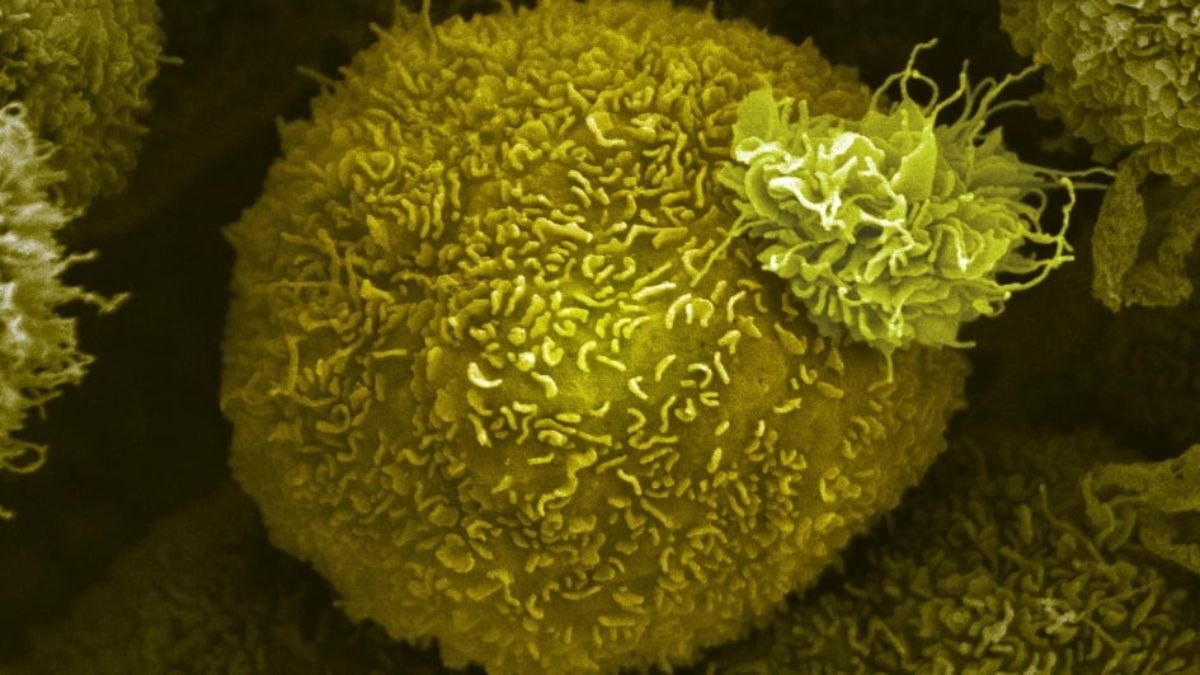
Pancreatic cancer has long been one of medicine’s most frustrating enemies. It moves fast, hides well, and resists most treatments. Fewer than 10 percent of patients survive five years after diagnosis, largely because the disease spreads to vital organs like the liver and lungs before doctors can stop it.
For decades, researchers knew this cancer was unusually aggressive, but they couldn’t explain how it escaped the natural barriers meant to contain it. Now, scientists from Cornell University believe they’ve found the missing link: a biological receptor called ALK7.
Table of Contents
Threat

The most common form of this disease, pancreatic ductal adenocarcinoma, behaves in a way that defies expectations. Tumors are surrounded by dense, fibrous tissue that should act like a cage, slowing growth and spread. In many cancers, this kind of structure helps contain the tumor. In pancreatic cancer, it barely seems to matter.
Instead of being trapped, cancer cells slip away and spread with alarming speed. This ability to bypass physical barriers has puzzled scientists for years and is a major reason why pancreatic cancer is so deadly.
Key
According to research published in the journal Molecular Cancer, ALK7 plays a central role in this escape act. The receptor triggers two powerful processes that help cancer cells break free.

First, it activates epithelial-mesenchymal transition, a process that allows cells to change their identity. Normally, epithelial cells stay in place. After this transition, they become more flexible and mobile, better suited to movement.
Second, ALK7 stimulates the production of enzymes that weaken blood vessel walls. Once those walls are compromised, cancer cells can slip into the bloodstream and travel to distant organs. As lead author Esak Lee explained, ALK7 gives cancer cells both the ability to move and the tools to invade.
Method
This discovery was only possible thanks to a cutting-edge technology known as organ-on-chip. Developed in Lee’s laboratory, this platform recreates human blood vessels on a tiny chip. It allows researchers to observe, in real time, how tumor cells interact with vessel walls under realistic conditions.

Before this, ALK7’s role was confusing. Some studies suggested it slowed tumor growth, while others hinted it made cancer worse. The organ-on-chip model resolved this contradiction. It showed that ALK7’s true function is not to restrain the tumor, but to help it expand and spread.
Timing
One of the most important findings of the study is that timing matters enormously. Blocking ALK7 only works if it happens early, before cancer cells enter the bloodstream. Once the cells are circulating freely, stopping the receptor makes little difference.
This creates a narrow but crucial window for treatment. As Lee noted, once the cancer has escaped into the blood, the blockade loses its power. This insight reinforces how critical early diagnosis is and highlights the need for therapies that target cancer before metastasis begins.
Impact
While the study focused on pancreatic cancer, its implications reach further. ALK7 may play a similar role in other aggressive cancers that spread early and resist treatment. Understanding this mechanism could help researchers identify common pathways that drive metastasis across multiple tumor types.
The organ-on-chip technology itself is also a breakthrough. It opens the door to studying how cancer cells, immune cells, and blood vessels interact in controlled environments. This could accelerate the development of new drugs and help predict which treatments are most likely to work in real patients.
Hope
Pancreatic cancer remains one of the deadliest diagnoses, but discoveries like this change the landscape. Identifying a clear trigger for metastasis gives scientists something concrete to target. It transforms an invisible process into a measurable one.
By combining advanced technologies with deeper biological insight, researchers are beginning to understand when pancreatic cancer is most vulnerable. That knowledge could lead to treatments that stop the disease before it spreads, turning one of the most feared cancers into one that can finally be contained.
Progress may be incremental, but this discovery marks a meaningful step toward a future where rapid cancer spread is no longer inevitable.
FAQs
What is ALK7?
A receptor that helps pancreatic cancer cells spread rapidly.
Why is pancreatic cancer so deadly?
It spreads early to vital organs like the liver and lungs.
What technology enabled this discovery?
An organ-on-chip system that mimics human blood vessels.
Can ALK7 be blocked to stop cancer?
Yes, but only if blocked very early before spread begins.
Could this apply to other cancers?
Researchers believe ALK7 may play a role in other aggressive tumors.