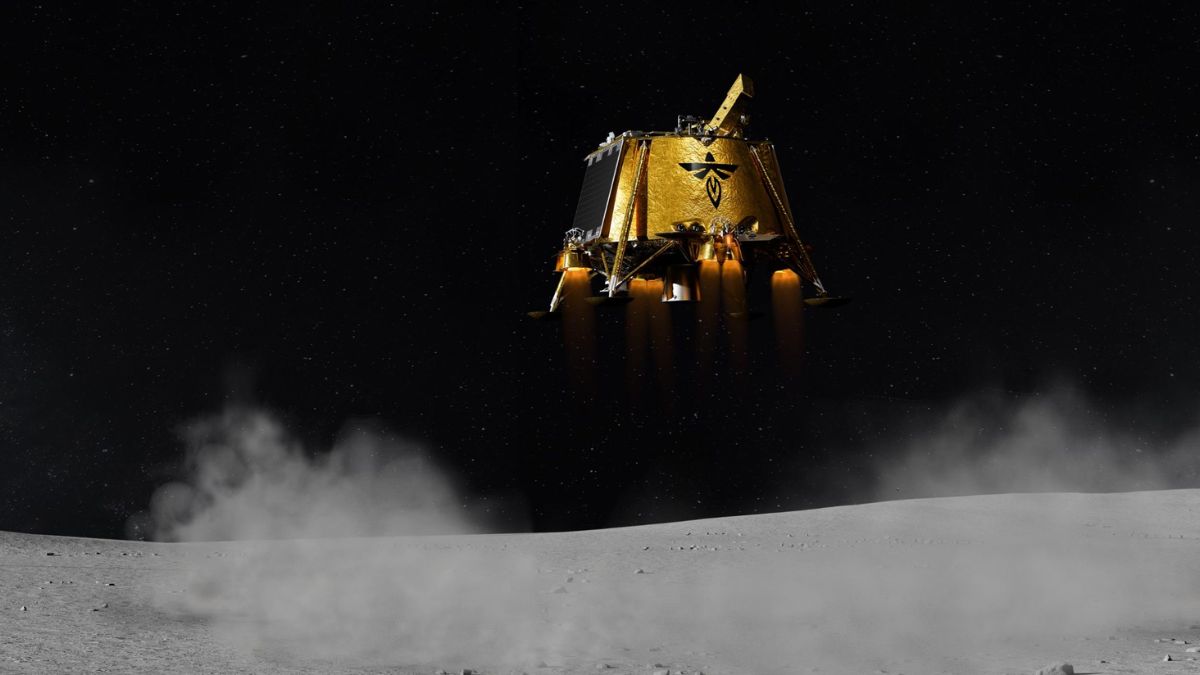
NASA has just confirmed a major breakthrough in modern space exploration. Firefly Aerospace’s Blue Ghost 1 has successfully landed on the Moon, making it one of the most significant moments since the Apollo missions.
Unlike in 1969, when astronauts made history, this time it’s a private spacecraft — no crew, just cutting-edge instruments designed to study lunar dust and ancient volcanic activity. Let’s cut into what this mission means for science, the Moon, and the future of space travel.
Table of Contents
Milestone

Remember the historic moment in 1969 when humans first set foot on the Moon? That event sparked decades of fascination with space exploration. Fast-forward nearly 60 years, and now we’re seeing another “first” — not by astronauts, but by a private spacecraft.
Blue Ghost 1 is the result of a growing collaboration between public institutions like NASA and private companies like Firefly Aerospace. This isn’t just a one-off event — it signals a new chapter in space exploration where commercial players are stepping in to expand what’s possible.
Landing
Launched in January 2025, the Blue Ghost 1 mission had one clear goal: reach Mons Latreille, a site located in the lunar region called Mare Crisium. Why this spot? It’s believed to be rich in volcanic history, offering scientists a chance to unlock stories buried in ancient Moon dust.

NASA later confirmed that Blue Ghost 1 landed safely and precisely at the intended location — a huge win, not just for Firefly but for everyone rooting for the next generation of space missions.
Purpose
So, what’s the big deal about Mare Crisium and this mission?
Blue Ghost 1 didn’t just go to the Moon to plant a flag or take selfies. It carried scientific instruments to study the Moon’s surface, particularly:
- Lunar dust composition
- Signs of past volcanic activity
- Soil conditions and surface measurements

All this data is crucial for future lunar missions — especially those aiming to send humans back under the Artemis program, which seeks to create a permanent presence on the Moon.
Impact
The success of this mission matters because it’s more than just tech — it’s about creating the future of space travel.
Firefly’s accomplishment shows that private companies can help make lunar travel safer, faster, and cheaper. And as NASA shifts some responsibilities to commercial partners, this frees up resources and speeds up innovation. That’s how we’ll get to the Moon again — and beyond.
Imagine building roads and bases on the Moon. That’s not science fiction anymore. This mission is helping pave the way — literally.
NASA
NASA’s acting administrator, Janet Petro, didn’t hold back her excitement:
“This incredible achievement shows how NASA and American companies are leading the way in space exploration for the benefit of everyone.”
Her statement highlights how vital these partnerships are. This isn’t just a NASA victory. It’s a team effort between government and industry, creating a new way forward where both contribute their strengths to explore deeper into space.
Private
We’re entering an era where space isn’t just for governments anymore.
Firefly Aerospace is part of a new wave of private space companies proving they can deliver. From Elon Musk’s SpaceX to Jeff Bezos’s Blue Origin — and now Firefly — private players are changing the rules of the game.
What does this mean? Faster timelines. More launches. New technology. And maybe, one day, lunar tourism or even permanent Moon bases.
Future
The successful landing of Blue Ghost 1 doesn’t just give us cool photos or data. It pushes humanity closer to living and working on the Moon.
We’re not just curious about what’s out there anymore. We’re actively preparing to make space a second home. With more missions in the pipeline, we’re likely to see increased activity, more landings, and yes — even the first steps toward human settlements.
From volcanic dust to building a Moon base, it’s all starting to come together. And the crazy part? This is just the beginning.
FAQs
What is Blue Ghost 1?
A private spacecraft by Firefly Aerospace that landed on the Moon.
Where did Blue Ghost 1 land?
It landed at Mons Latreille, in the Mare Crisium region.
What is the goal of the mission?
To study lunar dust and ancient volcanic activity.
Why is this mission important for NASA?
It supports the Artemis program and future Moon missions.
Are private companies changing space travel?
Yes, they now play a major role in lunar exploration.