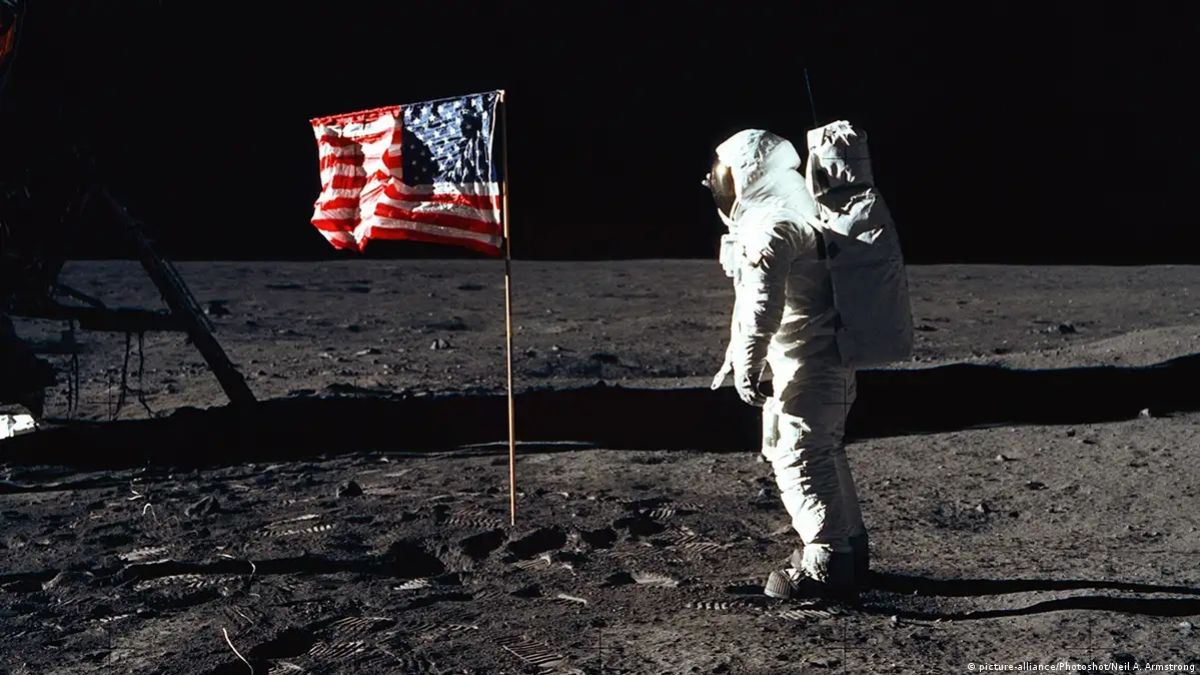
In a bold move that sounds like something out of science fiction, the United States has announced plans to build a fully inhabited lunar village within the next 10 years. This isn’t just another Moon landing or short-term mission — NASA wants to establish a long-term human settlement powered by nuclear energy.
The announcement, made by NASA Administrator Sean Duffy at the International Astronautical Congress (IAC 2025) in Sydney, highlights America’s ambition to lead the next era of space exploration. Meanwhile, other global space agencies are focusing on using space technology to address pressing issues here on Earth.

Let’s take a closer look at what this vision means, how it compares with the rest of the world, and what challenges lie ahead.
Table of Contents
Moonbase
So, what exactly is this “lunar village” the U.S. is planning?
The idea is to go beyond the traditional Moon base — which would typically support a few astronauts for a short duration — and instead build a fully operational village that could support long-term human life. This lunar village would be equipped with life support systems, communication hubs, and essential infrastructure for science, technology, and even industry. The vision isn’t to just visit the Moon anymore. It’s to stay.

NASA is partnering with private companies to bring this to life, including plans for housing, transport systems, and logistics. It’s a significant leap forward in human presence beyond Earth — one that could be a stepping stone for reaching Mars.
Nuclear
One of the key innovations that will power this lunar village is nuclear energy. Sounds intense, right?
NASA has already started working with private sector companies to design and build a small nuclear reactor that could be deployed on the Moon. Solar energy, although useful, has limitations on the lunar surface due to long nights and harsh conditions. Nuclear energy provides a reliable, long-term source of power, which is crucial for maintaining life and running essential systems on the Moon.

Think of it as building a power plant in your backyard — except your backyard is 238,855 miles away.
Mars
This Moon mission isn’t just about the Moon.
Sean Duffy made it clear: the Moon is only a stepping stone. NASA wants to use this experience to pave the way for human missions to Mars. By developing technologies and systems for long-term survival on the Moon, NASA believes it can better prepare for the even more challenging trip to the Red Planet.
So, while building a village on the Moon may sound like the ultimate goal, in reality, it’s just the start of an even more daring journey.
Vision
NASA’s long-term space exploration goals are in stark contrast to the main theme of the IAC 2025 conference — “Sustainable space, resilient Earth.” While most agencies spoke about using space to solve Earth’s problems, Duffy focused on how to sustain human life in space.
He emphasized that NASA is the only U.S. agency with a clear mandate to go beyond Earth. Other agencies handle Earth’s environmental and social challenges, freeing NASA to look outward. This clear division of roles shows how seriously the U.S. is taking its space ambitions.
Others
While the U.S. is looking toward the stars, most other countries are keeping their focus grounded.
Here’s what the other space powers had to say at the IAC 2025:
| Country | Focus Area |
|---|---|
| Europe (ESA) | Earth observation and climate monitoring |
| India (ISRO) | Ensuring food and water security |
| Canada (CSA) | Space-based biodiversity research |
| Japan (JAXA) | Monitoring greenhouse gases, LUPEX Moon mission |
| China (CNSA) | 500 Earth-monitoring satellites, orbital debris management |
Most countries are leveraging space technologies to tackle issues like climate change, food security, and environmental conservation. They are investing in satellite data, global cooperation, and sustainable technologies. It’s a different kind of ambition — one focused on making Earth more livable.
Debris
There was one issue everyone agreed on: space debris.
Satellites, rocket parts, and old spacecraft are cluttering Earth’s orbit, creating dangerous conditions for current and future missions. Here’s how countries are responding:
- China is developing systems to manage and remove space junk.
- Japan is backing private efforts like Astroscale, a company aiming to capture and safely remove dead satellites.
- But despite these efforts, there’s a shared concern that the problem is escalating faster than it can be solved.
International collaboration is essential. It’s a shared responsibility — because space junk doesn’t respect borders.
Future
So, what’s next?
The coming decade is set to be one of the most fascinating times in human space history. The U.S. wants a nuclear-powered village on the Moon, aiming to become the first nation to establish a permanent off-Earth colony. Meanwhile, other space agencies are doubling down on using space for sustainability — clean air, safe food, and climate research.
Two visions, not necessarily in conflict, but definitely diverging. One is about survival out there. The other is about survival down here.
Will the U.S. pull it off? That’s the big question. But if there’s one thing we know about space, it’s this: the race is never over, and the future is always closer than it seems.
FAQs
What is the lunar village plan?
NASA wants to build a Moon village for long-term human life.
How will the Moon village get power?
NASA plans to use nuclear energy for reliable lunar power.
Why is NASA focused on the Moon?
It’s a step toward sending humans to Mars in the future.
What are other countries focusing on?
Most focus on Earth sustainability through space tech.
Is space debris a real problem?
Yes, all agencies agree it threatens future missions.