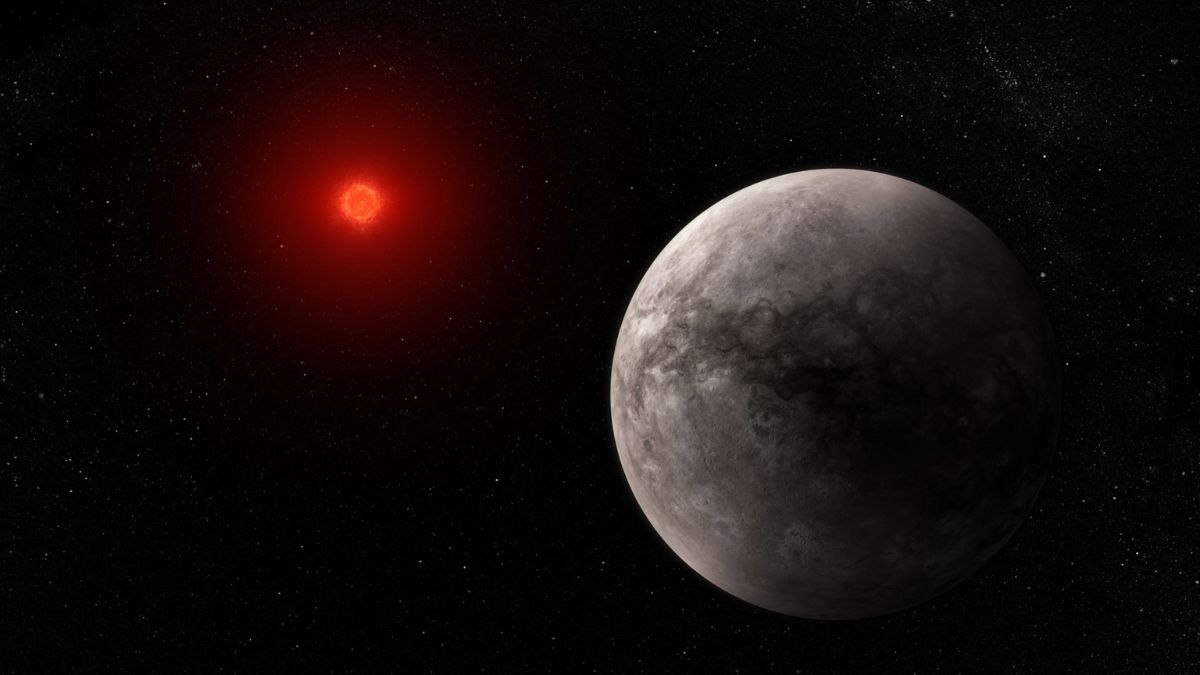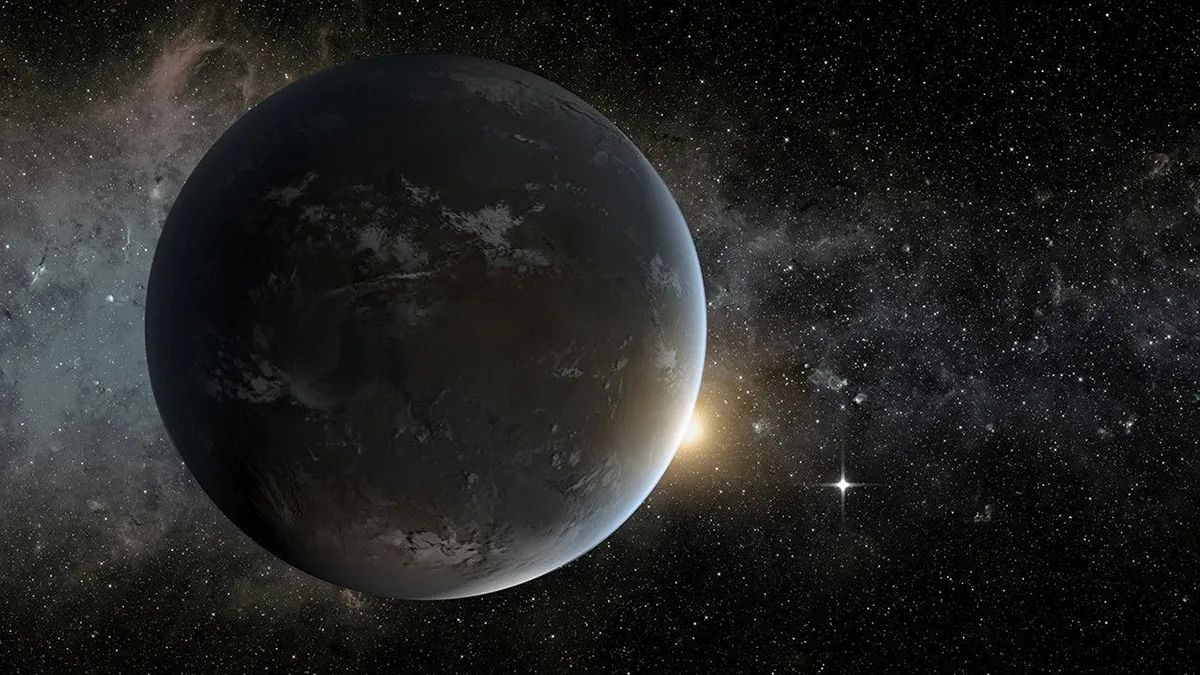
Is Earth the only place where life exists? That’s one of humanity’s biggest questions—and scientists may be one step closer to answering it. NASA has confirmed the discovery of a nearby “super-planet,” named GJ 251c, that might have the right conditions to support life.
Found just 18 light-years from Earth, this rocky world sits in its star’s “habitable zone,” where temperatures could allow liquid water to exist. So, let’s break down why this finding has experts so excited.
Table of Contents
Discovery

GJ 251c is what astronomers call a “super-Earth”—a planet larger and heavier than Earth but smaller than the gas giants like Neptune or Jupiter. What makes it so intriguing is where it’s located. It orbits a small, cool star called a red dwarf, and it sits within the star’s habitable zone.
This zone is also known as the “Goldilocks Zone” because it’s not too hot and not too cold—conditions that could allow water to remain in liquid form. And where there’s water, there’s potential for life.
Signals
The signals that confirmed GJ 251c’s existence weren’t audio messages or radio waves. Instead, scientists detected subtle changes in the star’s light as the planet moved around it. These light movements, or “wobbles,” told researchers that a planet was there—and that it was in the right place for life.

NASA has been watching closely because this discovery stands out. Many exoplanets are either too far away or too inhospitable to study. But GJ 251c is close enough to offer real opportunities for future observation.
Tools
The planet was found after two decades of sky monitoring using a powerful instrument called the Habitable Zone Planet Finder, developed by Penn State. This tool can detect tiny shifts in starlight caused by orbiting planets—basically, it looks for cosmic fingerprints left by far-off worlds.
But red dwarfs like the one GJ 251c orbits can make things tricky. These stars often produce strong magnetic activity, which can interfere with data. To get around this, scientists used advanced computer models to filter out the “noise” and isolate the real signals coming from the planet.
Importance
Why is GJ 251c such a big deal? First, it’s relatively close—only 18 light-years away. That might sound far, but in space terms, it’s just down the road.
Thanks to this proximity, astronomers believe that within the next 10 years, we’ll be able to capture direct images of the planet. That means studying its atmosphere, surface, and even potential signs of life.
Here’s what researchers hope to detect in GJ 251c’s atmosphere:
| Atmospheric Clues | What They Might Mean |
|---|---|
| Water vapor | Potential for lakes or oceans |
| Oxygen or methane | Possible signs of biological life |
| Carbon dioxide levels | Information about the planet’s heat |
| Chemical imbalances | Life processes or surface activity |
If any of these elements are detected, it could completely shift our understanding of life beyond Earth.
Future
With newer, more powerful telescopes being launched soon—like the James Webb Space Telescope and others—scientists will be able to explore planets like GJ 251c in more detail than ever before. That means we’re entering a new era of space discovery.
Over the next decade, researchers hope to scan this planet’s atmosphere and determine whether it holds biosignatures—chemical hints that something could be alive there. If they find any, it would be one of the most important discoveries in science history.
Possibility
This isn’t just about one planet. GJ 251c represents hope—hope that Earth isn’t the only place where life can thrive. The discovery proves that habitable worlds might be more common than we thought.
And who knows? GJ 251c might just be the first of many planets that lead us to the answer we’ve been searching for all along.
FAQs
What is GJ 251c?
A super-Earth exoplanet 18 light-years away.
Why is it special?
It sits in the habitable zone of its star.
Can GJ 251c support life?
It may have liquid water, so possibly yes.
How was it discovered?
Through light signals using the HZ Planet Finder.
When can we study it more closely?
Possibly within the next decade.