After more than a decade of silence, one of the rarest flowers on Earth has finally bloomed—and it reeks of rotting meat. Meet Rafflesia hasseltii, the jungle-born botanical oddity that recently made headlines after Indonesian botanists confirmed its rediscovery deep in the wilds of Sumatra.
It’s massive, parasitic, and blooms for just a few days. And yes, it smells as bad as it sounds.
Table of Contents
Discovery

The flower was found after a 13-year-long search, hidden away in the dense, humid forests of Sumatra. It took a dedicated team of researchers, long treks through harsh terrain, and a blurry cellphone photo from a forest ranger to finally locate it. Once they spotted a small bud, the team camped out and waited.
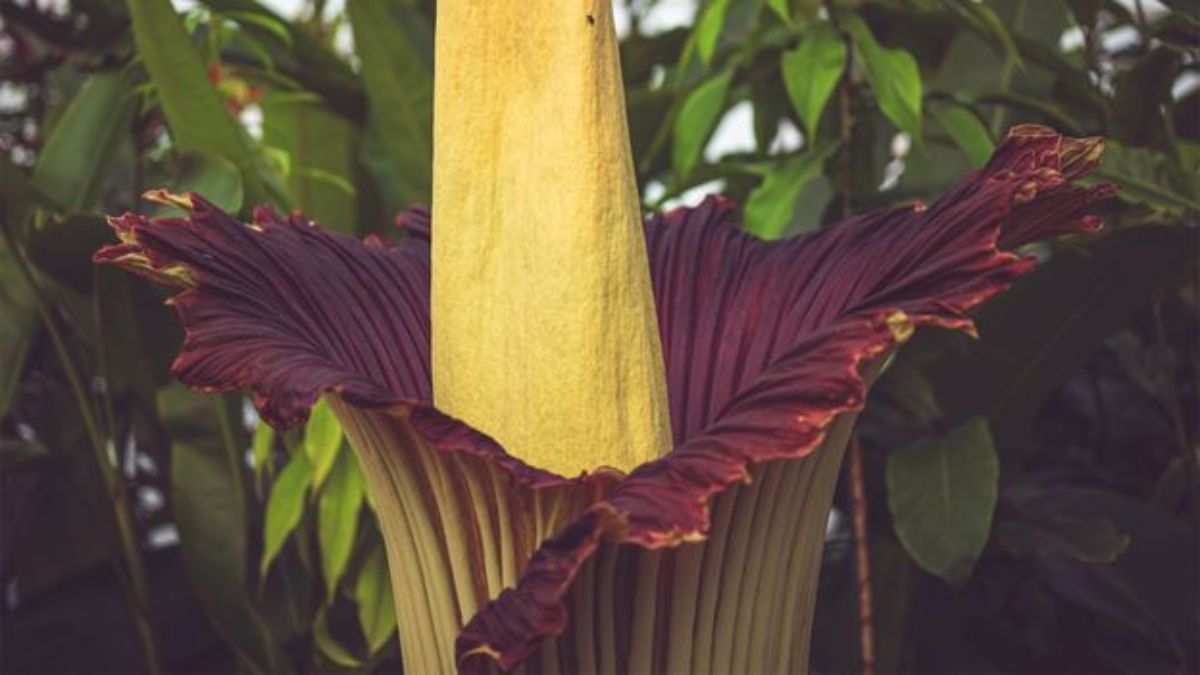
Hours later, under the soft glow of moonlight, the enormous flower began to open. Giant red petals with white blotches slowly unfolded, revealing a bloom over 1 meter wide. The scientists compared the moment to witnessing a birth—emotional, intense, and fleeting.
Appearance
This flower isn’t your garden-variety rose. It has no leaves, no stem, and no roots that you can see. It survives by latching onto a host plant like a parasite. It lives hidden for months—sometimes years—inside its host, then suddenly bursts into bloom.
And that bloom? It lasts just three to five days before the flower collapses and rots away.
Scent
Why does it smell like death? Well, that’s part of the plan. Rafflesia hasseltii mimics the odor of decomposing flesh to attract flies and insects. These unsuspecting bugs come looking for food or a place to lay eggs, and end up pollinating the flower.
It’s a survival strategy that’s gross—but genius. Instead of relying on bees or birds like most plants, it uses trickery, rot, and a heavy stench.
Biology

If you’re still wondering how a flower this strange can even exist, here’s a quick look at what makes Rafflesia so bizarre:
| Feature | Description |
|---|---|
| Scientific Name | Rafflesia hasseltii |
| Flower Diameter | Up to 1 meter |
| Smell | Like rotten meat |
| Visible Features | No leaves, stems, or roots |
| Pollination Method | Attracts flies using odor |
| Bloom Duration | 3–5 days |
| Life Cycle | About 9 months (mostly hidden) |
| Type | Parasitic plant |
Threats
The rediscovery is exciting—but also a warning. The flower’s extreme rarity is tied to its fragile habitat. Tropical forests are under constant threat from logging, mining, and palm oil plantations. These activities destroy not just the plants, but entire ecosystems.
Rafflesia has now become a symbol of what’s at stake. Losing it would mean more than the loss of a flower—it would represent the collapse of an entire ecological chain.
Ecotourism
With the news going viral, there’s rising interest in visiting the jungle to see the bloom firsthand. This could be good—for both science and local economies. Managed properly, scientific ecotourism could bring money to rural areas and offer alternatives to destructive industries.
But without strict protections, the flower could become a victim of its own fame. Rare plants like this are often targeted by illegal collectors or overexposed to tourist traffic. The challenge now is to find a balance between showing it off and saving it.
Urgency
This rediscovery shows that conservation only works when scientists, local communities, and policymakers work together. Protecting the last wild places isn’t just about preserving beauty—it’s about defending fragile systems that support life, both human and non-human.
Rafflesia reminds us that nature moves at its own pace—slow, quiet, and often unnoticed. But when it finally shows itself, the impact can be unforgettable.
The challenge for us now is not just to celebrate its return—but to make sure it’s not the last time we see it.
FAQs
Why does Rafflesia smell bad?
To attract flies for pollination by mimicking dead meat.
How big can Rafflesia get?
It can grow over 1 meter in diameter.
How long does the flower last?
The bloom lasts between 3 to 5 days.
Is Rafflesia a parasite?
Yes, it lives inside a host plant without photosynthesis.
Where was it found?
It was rediscovered in the Sumatra jungle, Indonesia.