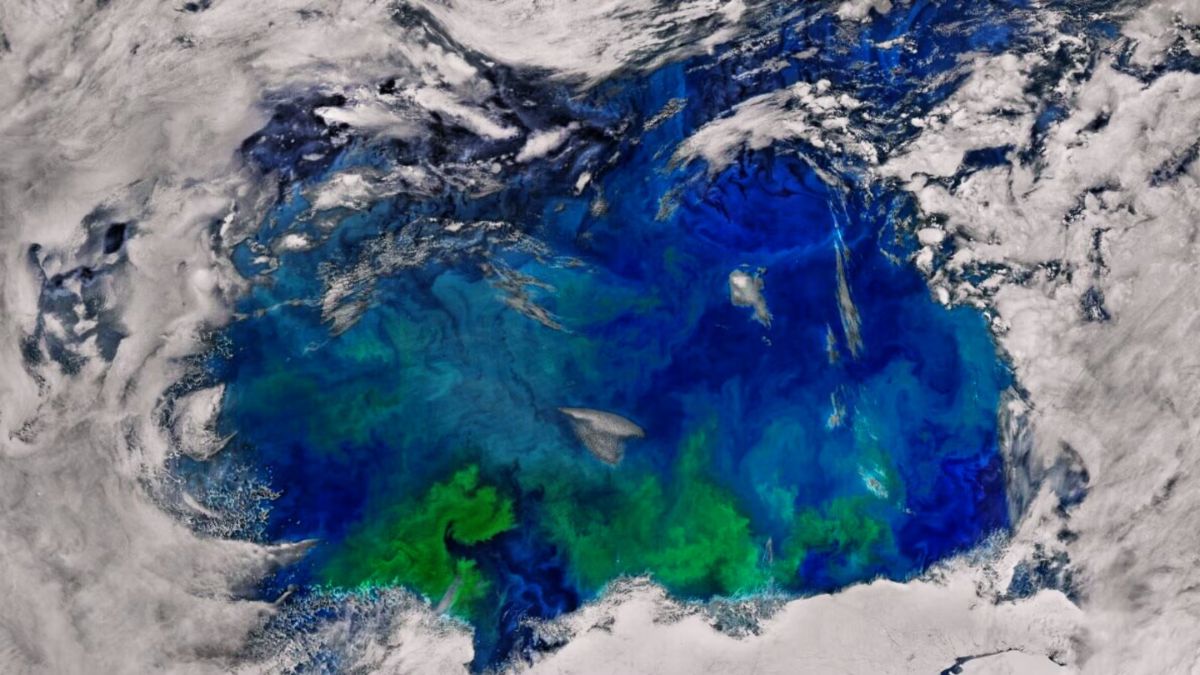
For more than a hundred years, the Southern Ocean — the vast, icy water surrounding Antarctica — has quietly done us a huge favor. It’s been soaking up much of the carbon dioxide (CO₂) and heat we’ve created by burning fossil fuels. This has helped slow down global warming more than most people realize.
But new research has uncovered a twist. This giant “sponge” in the ocean might one day squeeze out all that stored heat — releasing it back into the atmosphere like a big, steamy burp. And that could trigger another century of warming, even if we completely stop polluting. Sounds scary? Let’s break it down.
Table of Contents
Role

The Southern Ocean isn’t just another body of water — it plays a superhero role in protecting our climate. Think of it like a massive thermal battery. Every year, it absorbs:
- Around 90% of the excess heat caused by climate change
- Nearly 25% of the CO₂ released into the atmosphere
Thanks to this, the Earth has warmed slower than it could have. If it weren’t for the Southern Ocean, we’d likely be facing far more extreme climate conditions already.
But here’s the catch: this battery has limits.
Discovery

A team of German scientists from the GEOMAR Helmholtz Centre, led by Dr. Ivy Frenger, recently studied what might happen if we suddenly stop releasing CO₂ in the future. Using complex climate models, they painted a possible future:
- Humanity continues burning fossil fuels for another 70 years
- CO₂ levels double compared to pre-industrial times
- Then — either due to technology or strict climate action — emissions stop
- We even start pulling CO₂ out of the air
- The Earth begins to cool… but only in the atmosphere
So far, so good? Not quite.
Their models show that the oceans, especially the Southern Ocean, will still be holding onto a massive amount of heat. And at some point, that heat will rise back to the surface — and into the air.
Burping

So, what does it mean for the ocean to “burp” heat?
Over the years, the Southern Ocean has stored heat in its deep, cold layers. Normally, this heat would be released slowly through a process called upwelling — where deep water rises to the surface and lets off heat. But global warming has reduced this process. The result? Heat is getting trapped down below.
Once we stop adding new CO₂, upwelling will slowly return. When it does, the ocean will begin to release that stored heat back into the atmosphere — like uncapping a hot thermos. And this “thermal burp” could warm the planet again for a full century.
Even without new pollution.
Impact
So, who’s going to feel this second wave of heat the most?
According to the study, the Southern Hemisphere will be hit hardest. That means regions like:
- South America
- Africa
- Australia
- Southern islands and coastal communities
These areas already face challenges from climate change, including droughts, wildfires, and rising sea levels. This delayed warming could make those problems worse, even after we’ve cleaned up our emissions.
Lesson
This study sends a clear warning: waiting too long to act could have long-term consequences — even after we solve the pollution problem.
The sooner we cut down on CO₂ emissions, the less heat the Southern Ocean will absorb. That means less heat available to “burp” out later. It also gives us a better shot at stabilizing the climate in the long run.
The ocean may be out of sight, but it definitely shouldn’t be out of mind. What we do today echoes for centuries beneath the waves.
FAQs
What is the Southern Ocean’s role?
It absorbs CO₂ and heat, slowing global warming.
What is the ‘heat burp’ effect?
Stored heat may be released from the ocean, warming Earth again.
Who will be affected most?
South America, Africa, Australia, and southern islands.
How long could this warming last?
It may continue for about 100 years after emissions stop.
Can this be prevented?
Acting sooner to cut CO₂ can reduce stored heat and impact.