There’s a celestial surprise coming our way—NASA has confirmed that T Coronae Borealis, a star in the northern sky, is on the verge of a rare and explosive event. This incredible star system is expected to erupt in a flash so bright it will be visible without a telescope, shining like a new star for just one night.
This is no science fiction. It’s a real, rare astronomical event that happens roughly every 80 years—and the last time was back in 1946. So, if you’ve ever dreamed of seeing a star appear out of nowhere, this is your chance.
Table of Contents
TCrB

T Coronae Borealis, often shortened to T CrB, is located about 3,000 light-years away in the constellation Corona Borealis. It’s also nicknamed the “Blaze Star” because of the way it occasionally erupts in a flash of light that’s visible from Earth.
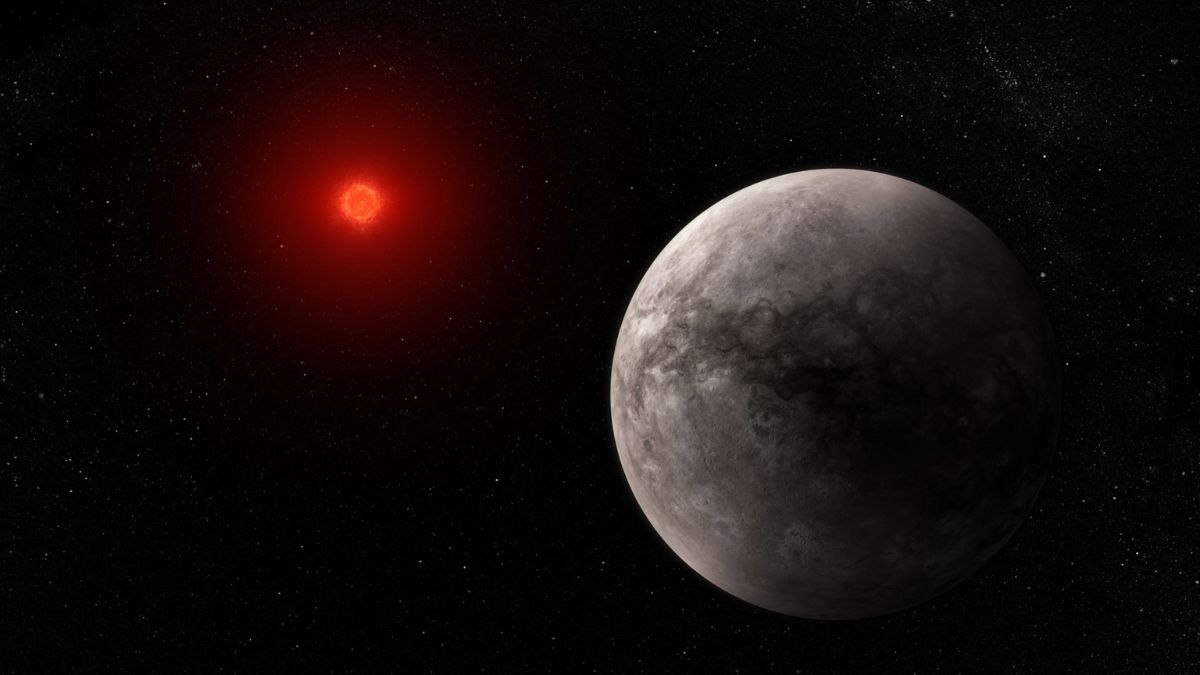
But this star is actually two stars, not one. It’s a binary system, meaning two stars are locked in an orbit around each other. One is a red giant, which is large and old, and the other is a white dwarf, which is small, hot, and incredibly dense.
Together, they create an explosive cycle unlike anything you’d expect.
Eruption

Here’s how it all works: the red giant is slowly shedding its outer layers, and the white dwarf is pulling in that gas. Over time, this gas builds up on the white dwarf’s surface like a growing fuel tank.
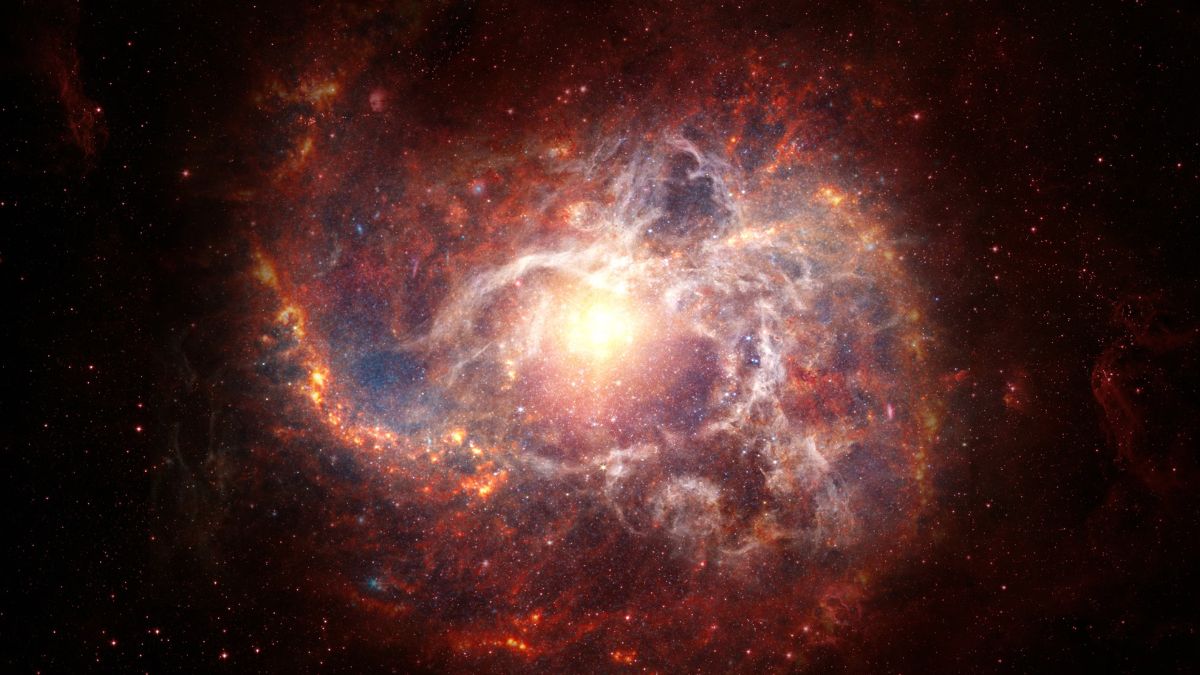
When enough material piles up, the pressure and heat become too much, triggering a thermonuclear explosion on the white dwarf’s surface. It doesn’t destroy the star, but it releases an intense burst of energy and makes the whole system suddenly very bright.
Think of it like a cosmic pressure cooker that eventually blows its lid—but instead of soup, you get a flash of light seen across the sky.
Visibility
Under normal conditions, T Coronae Borealis is far too faint to see with the naked eye. Its usual brightness is around +10 magnitude, meaning it’s invisible unless you have a telescope.
But when it erupts? That number shoots up to +2 magnitude—making it as bright as Polaris, the North Star.
And the best part? You won’t need any fancy equipment to see it. Just walk outside and look toward the Corona Borealis constellation. If you’re unsure where that is, look between the Boötes and Hercules constellations. Or better yet, use an astronomy app to help locate it in the night sky.
That said, the brightness won’t last long. Experts say the explosion will be visible for less than a day before fading back into darkness. It’s a once-in-a-lifetime moment—literally. The last time this happened was nearly 80 years ago.
Significance
Astronomers love these kinds of events because they serve as a natural laboratory in space. T CrB is what scientists call a recurrent nova—a star system that repeatedly explodes without destroying itself.
These eruptions help researchers know the difference between two major cosmic events:
| Type | Description |
|---|---|
| Nova | A surface-level explosion on a white dwarf; star survives |
| Supernova | A massive explosion from a dying star; the star is destroyed |
By studying T CrB, scientists can learn more about how stars interact in binary systems, how they age, and how materials move and behave under extreme pressure and heat.
Countdown
The excitement is building because signs are already here. In 2024, astronomers noticed T CrB was dimming, which usually happens right before an eruption. They also observed that the white dwarf is pulling in matter more quickly than usual—a clear sign that the explosion is imminent.
It’s even been documented in the past. A record from 1217 mentions a star that appeared briefly, described by a German monk as a “weak star that shone with bright light.” It’s believed that he was seeing T CrB during one of its historic outbursts.
Moment
So when will this happen? NASA hasn’t given a precise date, but it could be any day now. And when it does, the explosion will last only a few hours in terms of peak brightness. It may fade within 24 hours, making it a blink-and-you’ll-miss-it event.
If you catch it, it’ll look like a brand-new star suddenly appearing in the sky, then vanishing just as quickly. It’s not dangerous, but it is absolutely rare and beautiful.
If you love space or just want to be able to say “I saw that star the night it exploded,” keep your eyes on the skies—or better yet, set up a stargazing night with friends or family. It might just be one of the most spectacular natural shows of the decade.
FAQs
What is T Coronae Borealis?
A binary star system that erupts in brightness every 80 years.
Will T CrB be visible without a telescope?
Yes, it will be visible to the naked eye for less than a day.
Is the explosion dangerous to Earth?
No, it’s 3,000 light years away and poses no threat to Earth.
When did T CrB last explode?
In 1946, with historical records dating back to 1217.
Where can I find it in the sky?
Look in the Corona Borealis constellation, between Boötes and Hercules.