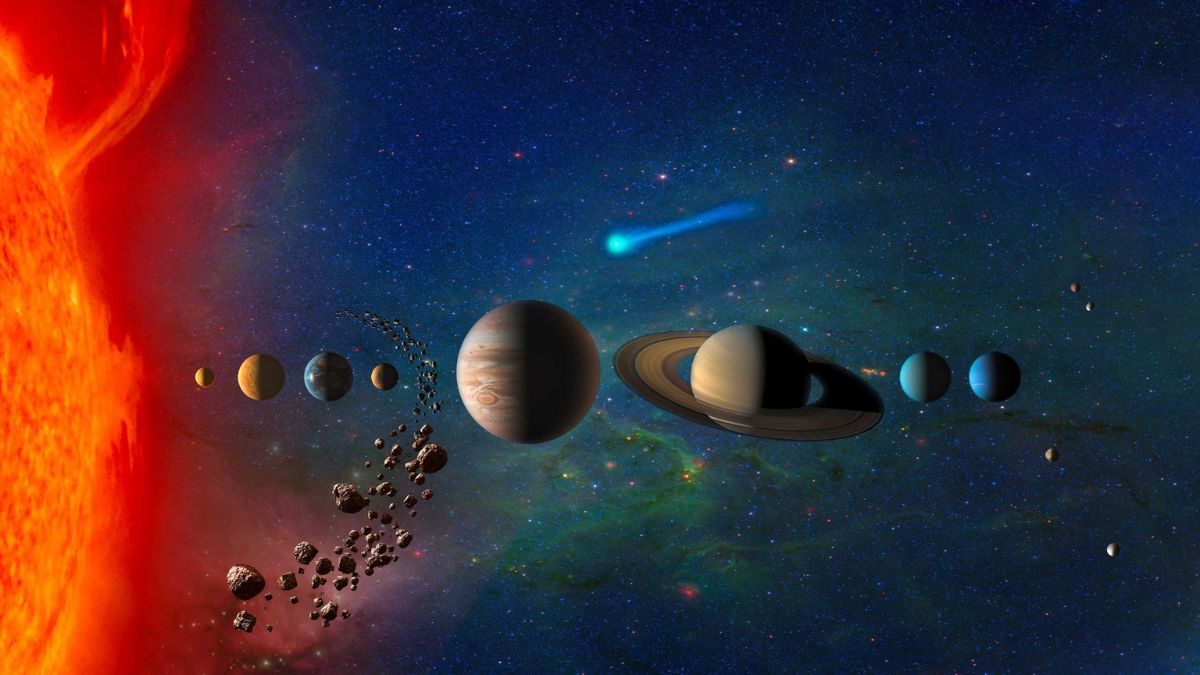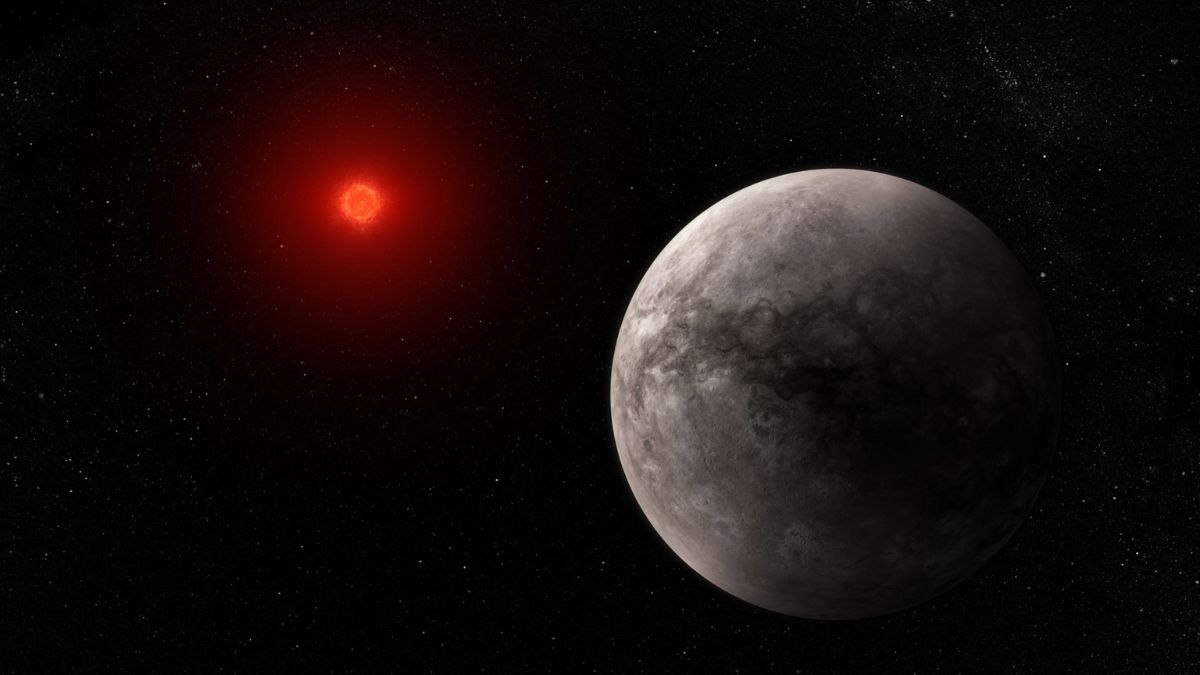
TRAPPIST-1 was once the golden child of astronomy. Seven rocky planets, many of them Earth-sized, several sitting right in the so-called “habitable zone,” and all of this just 40 light years away. It was the stuff dreams were made of—until reality kicked in.
Thanks to the latest data from the James Webb Space Telescope, our hopes are being reeled back in. The beloved TRAPPIST-1 system may not be the life-hosting paradise we thought it could be.
Table of Contents
Hype

Back in 2015, astronomers spotted something big—or rather, small but promising. TRAPPIST-1, a tiny ultracool dwarf star, had not one, not two, but seven rocky planets orbiting it. That alone would’ve been impressive, but three of them were located in the famous habitable zone. This is the distance from a star where liquid water might exist, theoretically allowing life to form.
These planets weren’t just rocks in space. They were eerily similar to Earth in size and structure, making scientists dream big. With the right atmosphere, some greenhouse effect, and a bit of luck, these could have been second homes.
Magic
Astronomers, space enthusiasts, and scientists alike fell in love. The system felt tailor-made for the search for life. Its planets orbited close to their small star, receiving just enough energy to make life plausible—if they had atmospheres. That was the big “if.” Atmospheres regulate temperatures, protect against radiation, and allow chemistry to do its thing.
Enter James Webb. The telescope was launched to help answer big questions like this. Could these planets hold onto their atmospheres? Could they show signs of water vapor, methane, or other gases that might hint at life?
Reality
Unfortunately, Webb had some cold water to throw on our cosmic daydreams. Observations of the inner TRAPPIST-1 planets—specifically TRAPPIST-1b, c, and d—showed no detectable atmospheres. In other words, if they ever had atmospheres, they’re gone now. Maybe they were stripped away by the star’s radiation. Maybe they never formed. Whatever the reason, life as we know it probably can’t exist there.
Here’s why it matters: without an atmosphere, a planet is just a rock baking in radiation. Temperatures swing wildly. There’s no protection from cosmic rays. There’s no water cycle, no surface chemistry, no chance for life to evolve—at least not like anything we understand.
Star
The culprit might just be the star itself. TRAPPIST-1 isn’t your typical calm and quiet sun. It’s an active little fireball, sending out intense solar flares and streams of radiation. These kinds of stars, while long-lived, tend to be very violent in their youth—and possibly even now.
That constant bombardment would make it incredibly difficult for a planet to hold onto an atmosphere, unless it had a super strong magnetic field or some other form of protection. Most small rocky planets don’t.
Doubt
Before Webb, some models gave us hope. Scientists thought even thin atmospheres might survive, or that we might be misunderstanding how atmospheres behave around such cool stars. There were even hints of gases, but now, many of those early signals are being re-attributed to the star itself. What we thought were planetary atmospheres may have just been the star playing tricks on our instruments.
Hope
Still, we’re not completely out of options. The outer planets—TRAPPIST-1e, f, and g—haven’t been ruled out yet. Especially TRAPPIST-1e, which still shows faint signs of potential. There’s a chance, albeit slim, that these planets could have retained their atmospheres. Some early data even suggest hints of gases like nitrogen or methane.
But scientists are approaching this more cautiously now. Gone is the excitement-driven speculation. Now it’s about methodical observations and double-checking the sources of every signal.
Method
To get clearer answers, astronomers will study multiple planets at once. This approach helps them separate signals coming from the star from those possibly coming from a planet’s atmosphere. If a planet like TRAPPIST-1e is shown to have a stable, detectable atmosphere, then the search for life in that system might not be over after all.
Here’s a quick look at how things currently stand:
| Planet | In Habitable Zone? | Atmosphere Detected? | Potential for Life |
|---|---|---|---|
| TRAPPIST-1b | No | No | Very Low |
| TRAPPIST-1c | No | No | Very Low |
| TRAPPIST-1d | Borderline | No | Very Low |
| TRAPPIST-1e | Yes | Inconclusive | Possible |
| TRAPPIST-1f | Yes | Unknown | Possible |
| TRAPPIST-1g | Yes | Unknown | Possible |
| TRAPPIST-1h | No | Unknown | Unlikely |
Search
The bigger lesson here is that having the right size and location isn’t enough. A planet needs a stable environment, an atmosphere, a magnetic field, and time—lots of time. Earth had all of these things line up perfectly, which might be rare in the universe.
So while TRAPPIST-1 may no longer be the dream it once was, it’s still a valuable case study. It reminds us that the universe doesn’t owe us easy answers. But every disappointment is a step closer to discovery.
Somewhere out there, life might still be waiting. If it’s not in TRAPPIST-1, maybe it’s in another system just a little further away. The search continues, just with more humility and sharper tools.
FAQs
Why is TRAPPIST-1 disappointing now?
New data shows most planets lack atmospheres, making life unlikely.
Which TRAPPIST-1 planets were once most promising?
TRAPPIST-1e, f, and g were in the habitable zone and Earth-sized.
What killed the atmospheres of TRAPPIST-1 planets?
Likely strong stellar flares and radiation from the host star.
Is TRAPPIST-1e still being studied?
Yes, it’s the last hope and may still have an atmosphere.
Can life exist without an atmosphere?
Not as we know it. Atmospheres are essential for Earth-like life.